Refinishing
Refinish or Replace? How to Tell What Your Hardwood Floor Really Needs
A tired-looking floor is rarely a lost cause. Here is how we decide between a light recoat, a full sand and refinish, or replacement, and what each one involves.
When a hardwood floor starts to look dull, scratched or worn, the first instinct is often to replace it. In our experience that is usually not necessary. Real hardwood is built to be renewed, and a floor that looks tired on the surface can often be brought back to a like-new finish for a fraction of the cost and disruption of tearing it out.
The right answer depends on how deep the damage goes. Here is how we work it out.
Option 1: Screen and recoat
If the wear is only in the finish — the floor has lost its sheen, has fine surface scratches, or looks grey in traffic lanes — but the wood underneath has not been exposed, a screen and recoat is often all it needs. We lightly abrade the existing finish so a fresh coat will bond, then apply new protective finish.
- Little or no dust, and usually done in a day.
- Restores shine and protection, and extends the life of the floor.
- Will not remove deep scratches, stains or dents, and cannot change the color.
A useful test: if a scratch catches your fingernail or shows bare, lighter wood, it is through the finish and a recoat will not hide it.
Option 2: Full sand and refinish
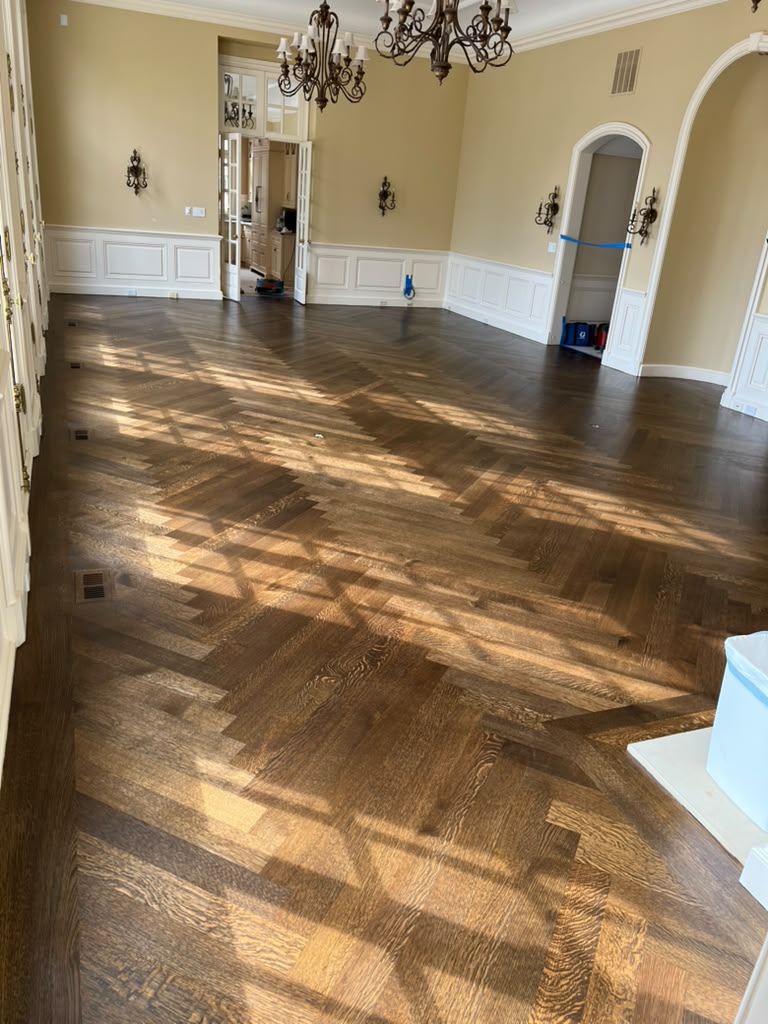
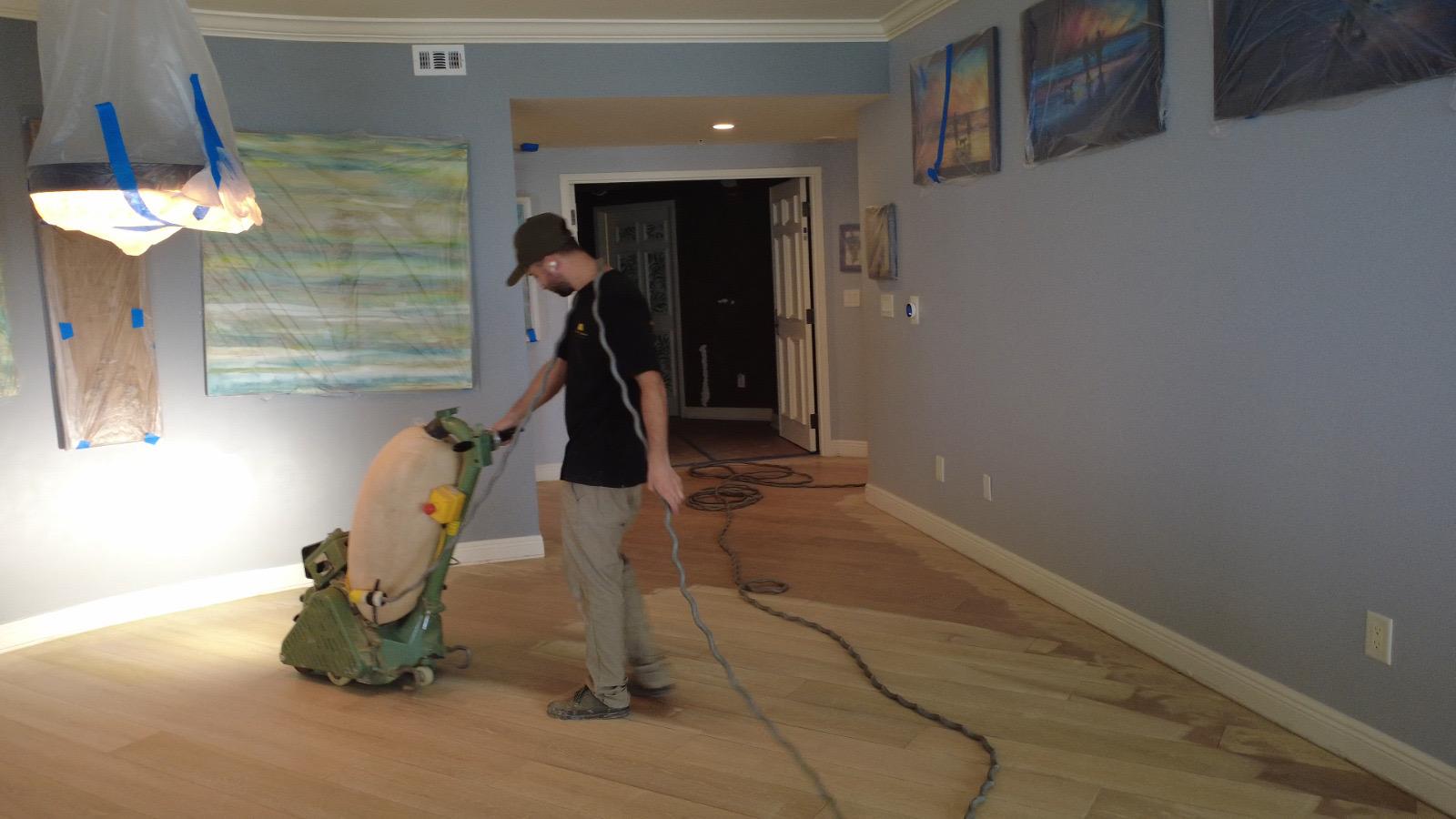
When there are deep scratches, pet stains, worn-through traffic paths, or you simply want a different color, the floor needs to be sanded back to bare wood and refinished. We work through progressively finer grits to take out the damage and leave a smooth surface, then stain if you want a new color and apply several coats of finish.
- Removes most surface damage and gives you a truly new-looking floor.
- Lets you change the color completely — lighter, darker or natural.
- Takes several days, and the rooms are out of use while finish cures.
The question that decides it: how much wood is left?
Every sanding removes a thin layer of wood, so the real limit is how much usable wood sits above the tongue and groove (on solid floors) or above the core (on engineered floors).
- Solid hardwood, typically three-quarters of an inch thick, can usually be sanded several times over its life.
- Engineered hardwood depends entirely on its top layer, the wear layer. A thick wear layer can be sanded once or more; a very thin one may only take a recoat.
We check this before recommending anything, usually by looking at an exposed edge such as a floor vent or threshold. If there is not enough wood left to sand safely, we will tell you rather than sand through it.
When replacement really is the better choice
Sometimes a new floor is the right call:
- Large areas of water damage, rot or boards that have come loose from the subfloor.
- An engineered floor whose wear layer is already worn through.
- A floor that has been sanded so many times the tongues or nails are showing.
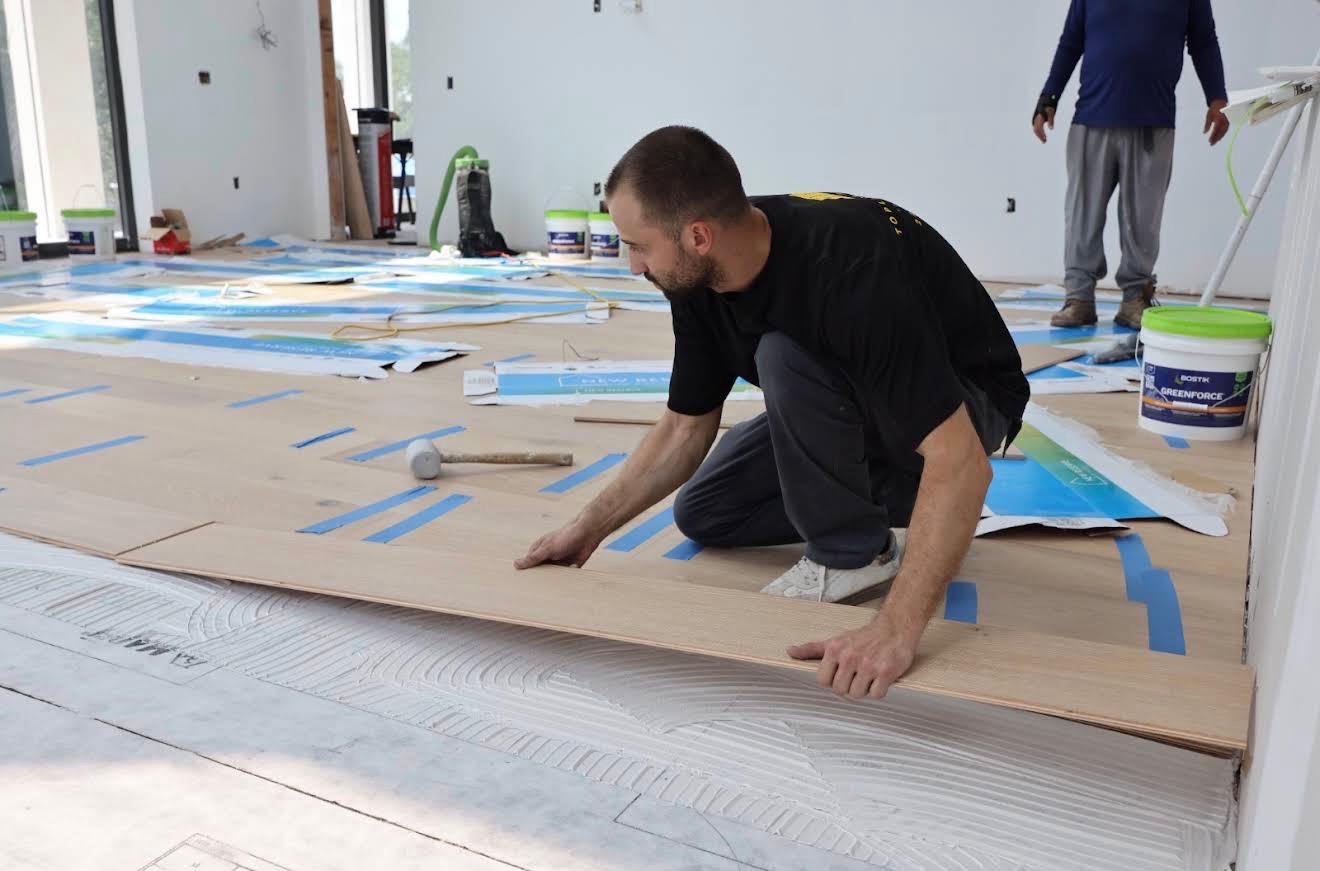
- You want a completely different look, such as wider planks or a herringbone pattern.
Even then, it is often possible to replace only the damaged section. We can weave new boards into the existing floor and then refinish the whole room together, so the repair disappears.
What about stains and dark spots?
Light surface marks usually sand out. Dark grey or black stains, often from pet accidents or long-standing water, have generally soaked deep into the wood. Those boards are better cut out and replaced with matching wood before the floor is refinished. We can also color-match new boards to an older floor so the repair blends in.
Not sure which one you need?
The honest answer comes from looking at the floor in person. We will check the finish, the depth of the damage and how much wood is left, and recommend the least invasive option that gets you the result you want. Book a free estimate and we will walk the floor with you.