Care & Climate
Hardwood Floors and Florida Humidity: How to Keep Them Flat Year-Round
Cupping, gaps and squeaks almost always trace back to moisture. Here is how Naples humidity affects real wood, and the simple habits that keep a floor flat through rainy season.
Wood is never really finished moving. Long after it has been milled, dried and coated, every board keeps trading moisture with the air around it, swelling a little when the air is damp and shrinking when it is dry. In most of the country that movement is gentle. In Southwest Florida, where summer humidity sits high for months and air conditioning runs hard against it, it is the single biggest factor in how a hardwood floor looks and lasts.
The good news is that a floor that is installed and looked after with that in mind will stay flat and quiet for decades. Here is what is actually going on, and what you can do about it.
What humidity does to a hardwood floor
The problems people call us about nearly always fall into one of three patterns:
- Cupping — the edges of each board rise higher than the center. This means the underside of the floor is wetter than the top, usually from moisture coming up through a slab or crawlspace, or from a period of very high indoor humidity.
- Crowning — the opposite: the center of the board is higher than the edges. Often this is a cupped floor that was sanded flat before it had dried out, and has since shrunk back.
- Gapping — thin lines opening between boards. Some seasonal gapping is normal. Wide or growing gaps mean the room is running much drier than when the floor went in.
None of these is a defect in the wood itself. They are the wood telling you about the conditions around it.
The number to watch: 35–55% relative humidity
Most hardwood manufacturers ask for the indoor relative humidity to stay roughly between 35% and 55%, and many tie their warranty to it. A small digital hygrometer costs very little and tells you exactly where your home sits. Put one in the main living area and glance at it now and then, especially in the first summer after a new floor goes in.
If you are regularly above that range, the usual fixes are simple: keep the air conditioning running rather than switching it off for long stretches, make sure the system is sized and serviced so it actually removes moisture, and consider a dehumidifier in rooms that stay muggy.
Seasonal homes need a plan
Plenty of homes in Naples, Marco Island and Bonita Springs sit empty through the summer. Turning the AC off, or setting it very high, while you are away is the fastest way to cup a hardwood floor. A thermostat set to a moderate temperature with humidity control, or a whole-home dehumidifier, protects the floor far more cheaply than repairing it. Many smart thermostats will show you indoor humidity remotely, so you can check on the house from wherever you are.
How a good installation prevents problems
Most moisture trouble is decided before the first board is fastened down. On every installation we:
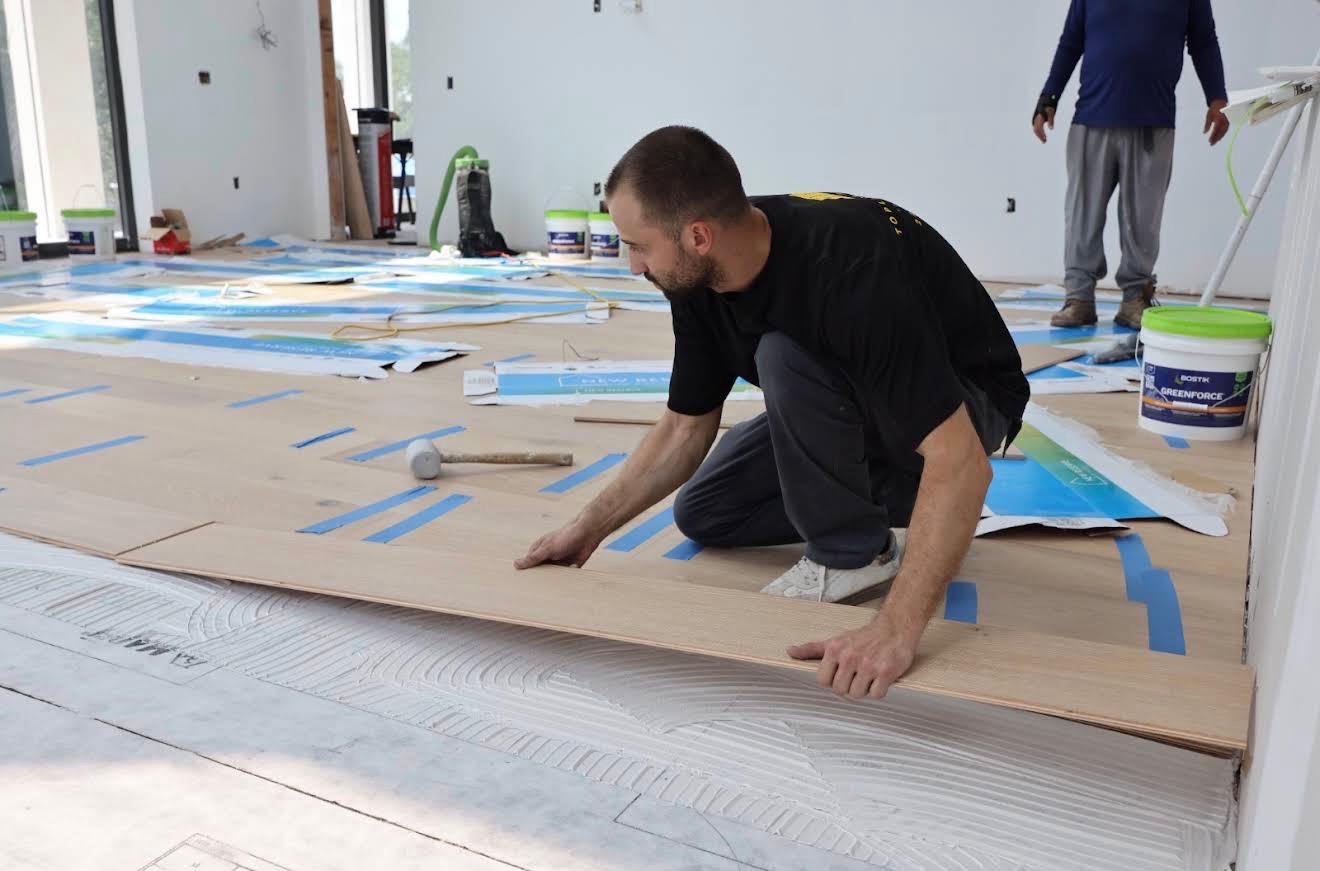
- Test the subfloor. Concrete slabs, common across Southwest Florida, can hold a surprising amount of moisture. We measure it rather than guess, and use the right moisture barrier or adhesive system for what we find.
- Acclimate the wood. Boards are brought into the home and checked with a moisture meter so they are installed close to the conditions they will live in, not the conditions of a warehouse.
- Leave room to move. An expansion gap around the edges of the room, hidden under baseboards and trim, lets the floor swell slightly without pushing against walls.
- Choose the right product. Engineered hardwood, with its cross-layered core, moves noticeably less than solid wood and is often the better choice over a slab or in a ground-floor condo.
Everyday habits that help
- Wipe up spills and pet water bowls promptly, and never wet-mop. A barely damp microfiber mop with a cleaner made for finished wood is all a floor needs.
- Use breathable rugs and rug pads; rubber-backed mats can trap moisture against the finish.
- Put mats at doors to the lanai and pool area, where wet feet come in.
- Watch for slow leaks under sinks, refrigerators with ice makers, and around dishwashers. A small leak can cup a whole row of boards before anyone notices.
When to call a professional
Mild cupping after a humid spell will often settle on its own once the room has dried out, so the worst thing to do is sand it flat straight away. If the cupping is severe, spreading, or has not improved after a few weeks of stable conditions, it is time to find the moisture source. Once the floor has dried and settled, most can be sanded and refinished back to flat, with only the badly damaged boards replaced.
If you are seeing any of the signs above, or planning a new floor and want it done right for our climate, get in touch for a free in-home estimate. We will bring a moisture meter and tell you honestly what we find.