Design
Choosing a Hardwood Stain Color for a Coastal Home
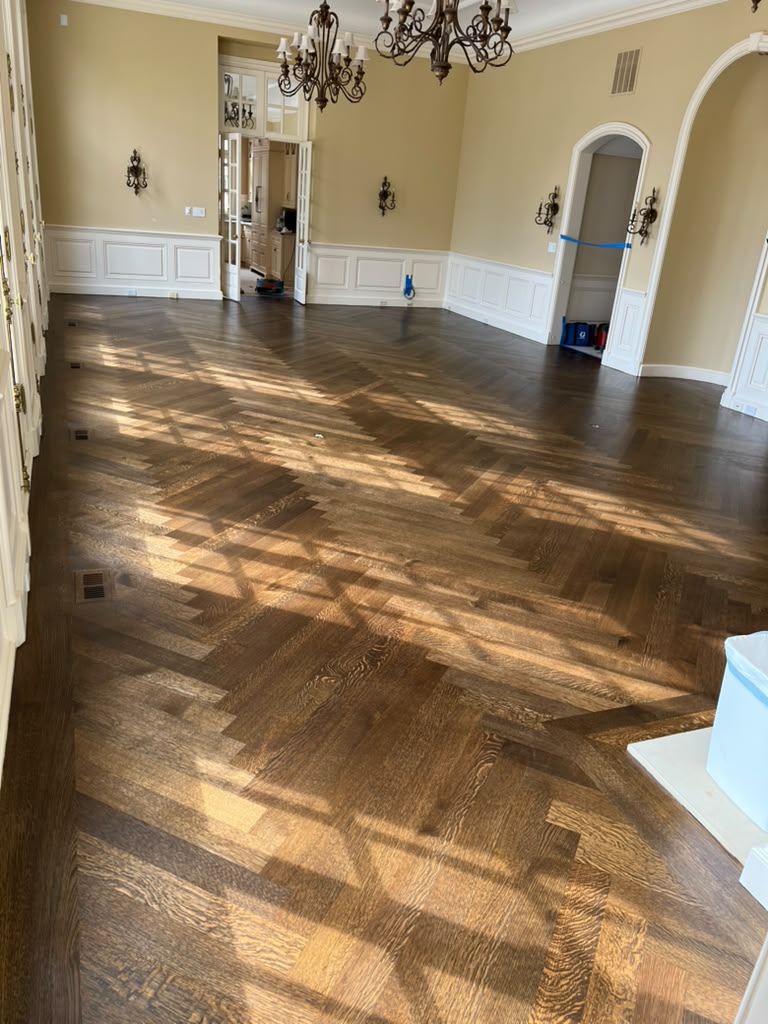
Stain looks different on every species, in every room and under Florida light. Why we always sample on your own floor, and what to think about before choosing a color.
Picking a floor color from a small sample board or a photo online is one of the most common ways people end up disappointed with a refinish. The same stain can look completely different on two floors, and even in two rooms of the same house. That is why we never choose a color from a chart alone: we test it on your floor, in your light, before we commit.
Here is what changes how a stain looks, and how to choose one you will still love in ten years.
Why stain looks different on every floor
- Wood species. Red oak has a pinkish undertone and open grain that drinks in stain. White oak is cooler and more muted. Maple and birch have tight grain and can take stain unevenly, which is why they are often left natural or treated with special care.
- The age of the wood. Older floors have often ambered with time, which warms whatever color goes on top.
- How it is sanded and prepared. The final sanding, and techniques such as water-popping, which opens the grain so it accepts more stain, can noticeably deepen a color.
- The finish on top. Some finishes add an amber tone over time, while water-based finishes tend to stay clearer. Your stain and finish need to be chosen together.
Florida light changes everything
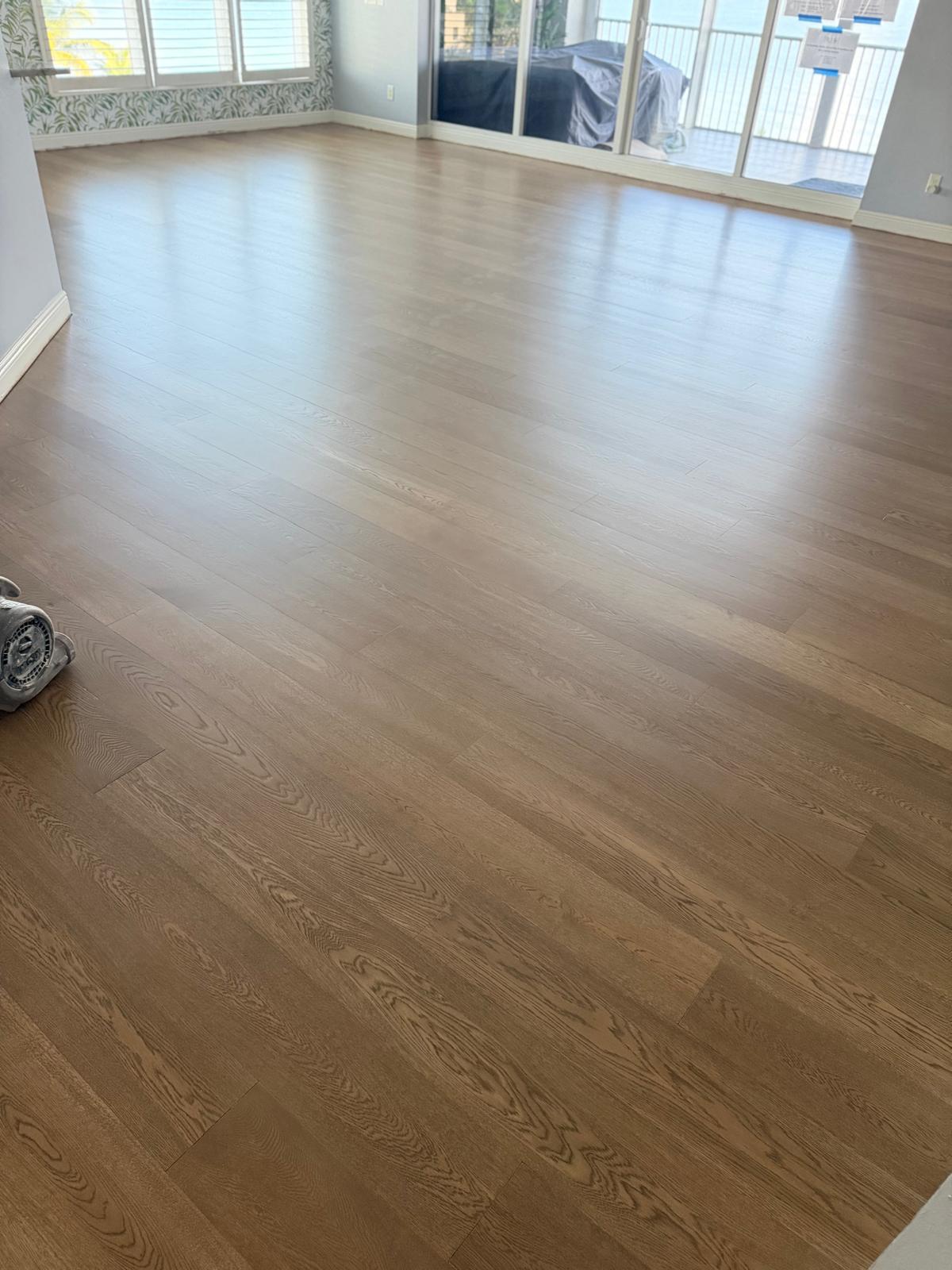
Southwest Florida homes get bright, strong daylight, often reflected off water, white walls and large sliding doors. That light tends to wash colors out and exaggerate undertones. A brown that looked rich in a showroom can read flat or orange in a sunny great room, while a very pale floor can look almost white near a window.
So we apply sample patches in the rooms that matter and ask you to look at them in the morning, at midday and in the evening before deciding. A color that works in all three is a color you will be happy with.
Popular directions for coastal homes
- Natural and near-natural. A clear finish or a very light stain that keeps the wood's own color. It suits relaxed coastal interiors and hides sand and dust well.
- Light, soft neutrals. Pale tones that brighten a room and feel calm next to white walls and linen fabrics, without tipping into grey.
- Warm mid-tones. Honey and light brown shades that feel timeless and work with both traditional and modern furniture.
- Deep, rich browns. Dramatic and elegant, especially in formal rooms, but they show dust, pet hair and scratches more readily than lighter floors.
Practical things to weigh up
- Maintenance. Mid-tones are the most forgiving. Very dark and very light floors both show everyday dirt more.
- Pets and sand. If you have dogs or walk in from the beach, a lighter or mid-tone floor with visible grain will hide wear far better than a dark, uniform one.
- The rest of the house. Look at cabinets, stair treads, door frames and furniture. Your floor should either complement them or contrast on purpose, not clash by accident.
- Resale. Neutral and natural tones appeal to the widest range of buyers.
How our sampling works
Once the floor has been sanded, we lay out several sample patches side by side on the bare wood, usually your favorite color plus a shade lighter and darker. Each patch gets the actual finish we will use, so you see the true final color rather than raw stain. You take your time, look at them in different light, and only then do we stain the room.
It adds a little time to the project, and it is the single best way to avoid an expensive mistake. If you are thinking about a new color for your floors, ask us about sampling during your free estimate.